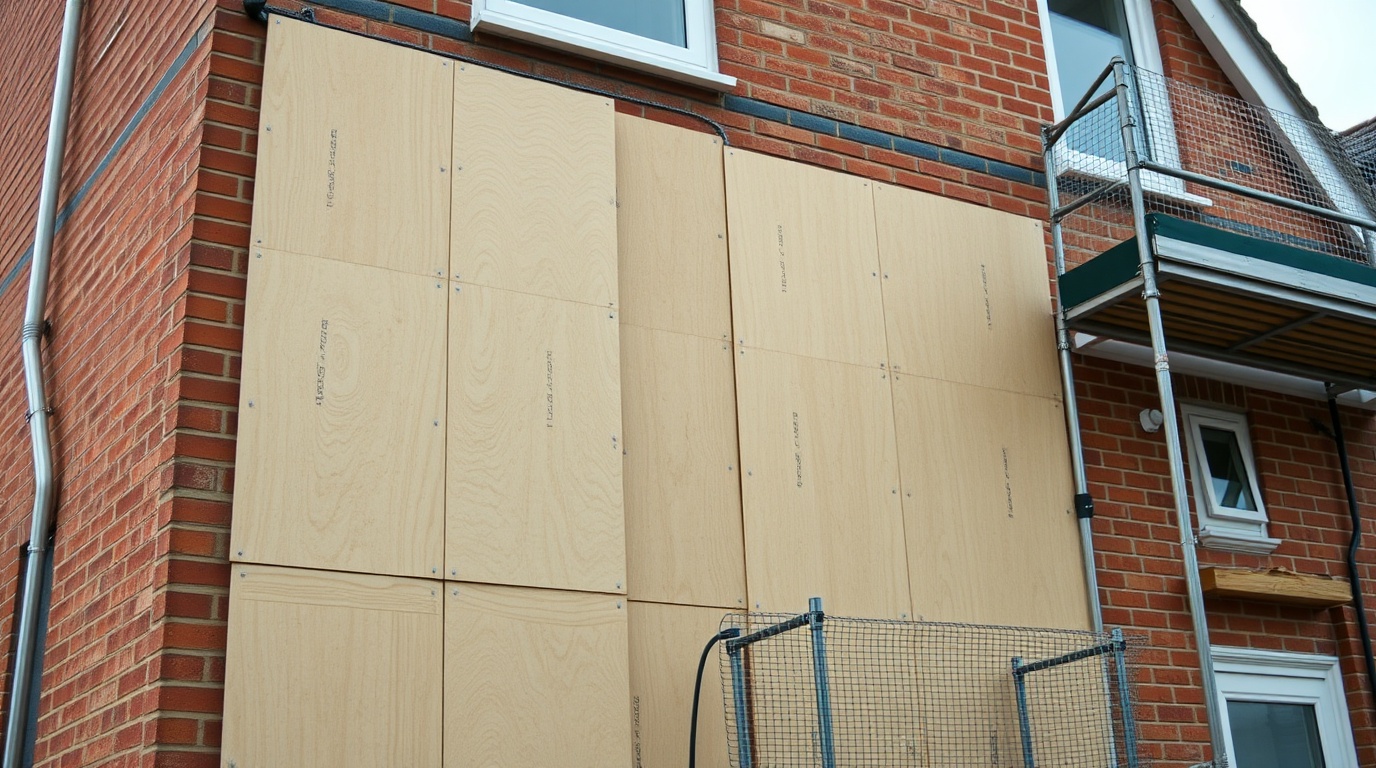
The short answer
Neither is universally better — it depends on the building. External wall insulation (EWI) wraps the outside of the house, gives the most even result, keeps the masonry warm and avoids losing room space, but it is the more expensive option, changes the look and often needs planning permission. Internal wall insulation (IWI) is fitted room by room on the inside, costs less per square metre and leaves the exterior unchanged, but it reduces floor area, is disruptive to live through and needs careful detailing to avoid condensation behind the insulation. As a rule of thumb, EWI suits homes that need re-rendering anyway and have no planning constraints, while IWI suits attractive frontages, conservation areas and budgets where doing one room at a time helps.
The internal-versus-external question is the single biggest decision in a solid wall retrofit, and the right answer changes from house to house. Below, the trade-offs are set out honestly so you can match them to your property.
Quick comparison
- Lower costInternal (IWI)
- Best heat-loss resultExternal (EWI)
- Keeps room sizeExternal (EWI)
- Keeps exterior lookInternal (IWI)
- Lower moisture riskUsually external (EWI)
Cost, space and appearance
Cost: IWI is generally the lower-cost method per square metre, and you can phase it room by room to spread the spend. EWI costs more because it involves scaffolding, boarding the whole exterior and a rendered or clad finish. Space: IWI adds thickness to the inside of every treated wall — commonly 60–120mm once the insulation and plasterboard are in — so rooms get slightly smaller, which matters most in small terraces. EWI takes no internal space at all. Appearance: IWI leaves the outside untouched, preserving period brick or stone; EWI changes the external finish and can alter window reveals and roof-line details, which some owners dislike and which can need planning consent.
| Factor | Internal (IWI) | External (EWI) |
|---|---|---|
| Relative cost | Lower | Higher |
| Internal space | Reduced 60–120mm per wall | Unchanged |
| Exterior look | Preserved | Changed |
| Can phase by room | Yes | Usually whole house |
| Disruption to occupants | High inside | Mostly external |
Indicative comparison for guidance. Sources: Energy Saving Trust solid wall insulation guidance.
Planning, disruption and continuity
EWI is more likely to need planning permission because it changes the external appearance, and it is generally not allowed on the principal elevation in a conservation area or on a listed building without consent. IWI rarely needs planning permission but is far more disruptive to live with — rooms are emptied, skirting, sockets, radiators and coving are removed and refitted, and you usually cannot use a room while it is being done. EWI also gives better continuity of insulation: it is easier to insulate past floor junctions and around the building without gaps, whereas IWI leaves harder-to-treat 'thermal bridges' at internal walls, floor and ceiling junctions where heat can still escape and cold spots can form.
Moisture and condensation risk
This is where the two methods differ most in principle. EWI keeps the original wall on the warm side of the insulation, so the masonry stays warmer and drier and the dew point sits in the new external layer rather than in the wall. IWI does the opposite — it leaves the masonry cold and wet on the outside and moves the cold zone closer to the room, so without a correctly specified vapour control layer and adequate ventilation, moisture can condense within or behind the insulation and cause damp or mould.
How to choose for your home
Work from the building outwards, not from price alone. EWI tends to win where the render or pebbledash needs replacing anyway, where you want maximum, even heat-loss reduction with no internal disruption, and where there are no planning constraints. IWI tends to win on attractive brick or stone frontages, in conservation areas, where the budget only allows one or two rooms at a time, or where access to the outside is difficult. Whichever you pick, the UK retrofit standard PAS 2035 expects a whole-house assessment first — covering construction, moisture and ventilation — so the system suits the wall and does not store up damp problems.
Hybrid approaches and phasing
The choice is not always all-or-nothing. Many homes use a hybrid approach — for example, external insulation on the rear and side elevations where appearance and planning allow, and internal insulation on a protected period frontage. This can capture much of the benefit of EWI while preserving an attractive or constrained front. The catch is the junctions: where an internally insulated wall meets an externally insulated one, the detailing has to be designed so there is no gap and no cold bridge, which is a job for a competent retrofit designer rather than a guess on site.
Phasing matters too. EWI is generally a single whole-house project because scaffolding and rendering the whole building at once is most efficient, whereas IWI can be done room by room over months or years to spread the cost and disruption. If you phase IWI, it is worth having the overall plan designed up front so each room is detailed consistently and the junctions between treated and untreated walls are handled, rather than improvising each time. Either way, the decisive factors are the building's construction and constraints, the result you want, and your budget — in that order — with price as the tie-breaker rather than the starting point.
Living with the work and the result
The two methods feel very different to live through. EWI is mostly an external job: scaffolding goes up, the boards and render are applied over a few weeks, and the inside of the home is largely undisturbed, so you can carry on as normal. The downside is the visible change to the house when it is done, and the need to extend roof verges, sills and downpipes to suit the thicker walls. IWI is the reverse: nothing changes outside, but each room is emptied and disrupted in turn, which is harder to live around, especially if you do the whole house.
The finished result differs too. EWI tends to deliver the more even warmth because it wraps the building continuously, with fewer cold spots, and it keeps the masonry warm and dry. IWI warms the treated rooms well but can leave cold bridges at junctions if not carefully detailed, and it gives back slightly less floor space than you started with. Neither outcome is wrong — they suit different houses and different priorities — but knowing how each one feels day to day, and not just on paper, helps you pick the method you will actually be happy with once the work is finished.
Frequently asked questions
Is external wall insulation worth the extra cost?
Often, yes, if the exterior needs work anyway or you want the best, most even result with no loss of room space. EWI keeps the masonry warm and dry and avoids the cold spots IWI can leave at junctions. The catch is the higher upfront cost and possible planning permission.
Can I use internal insulation on some walls and external on others?
Yes, hybrid approaches are used — for example external insulation on the rear and side, and internal on a protected period frontage. It needs careful design at the junctions so the two systems meet without leaving gaps or cold bridges, ideally as part of a PAS 2035 assessment.
Which method has the lowest condensation risk?
External insulation generally carries the lower risk because it keeps the wall warm and lets it dry to the inside. Internal insulation can be done safely but needs a correct vapour control strategy and good ventilation, otherwise moisture can condense behind the boards.
Sources & further reading
Figures on this page are typical UK ranges drawn from published sources and depend on your specific property. They are guidance, not a quotation.